|
|||||||||||||||
| ___ | ___ | ||||||||||||||
| SCUTTLEBUTT is the official newsletter of the USS Guadalcanal Task Group 22.3 Association, published four times yearly. Association members and friends are encouraged to submit articles and photographs for publication; some editing may be required. | |||||||||||||||
 |
Click on the icon to submit articles and photographs to the Scuttlebutt | ||||||||||||||
Articles
from the December 2003 issue of the SCUTTLEBUTT |
|||||||||||||||
| Glen Henricks Remembers the Big Storm… | |||||||||||||||
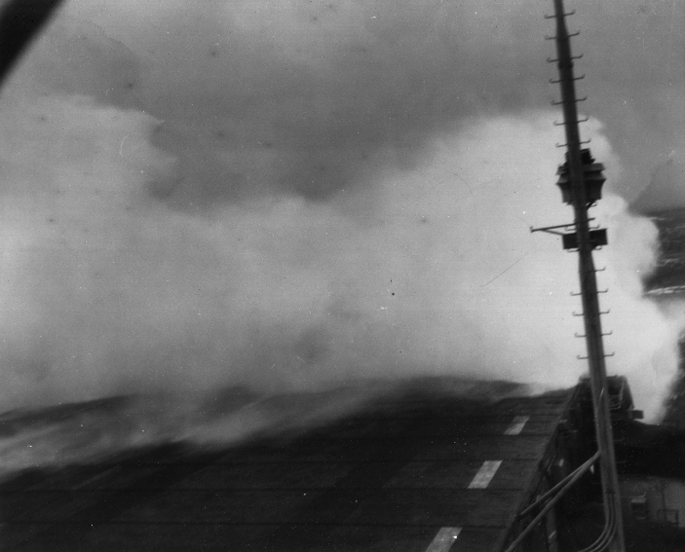
On September 28, 1944, sailing as Task Group 22.7, USS Guadalcanal escorted by the DEs Pillsbury, Pope, Chatelain, Flaherty, and Neunzer departed Norfolk and headed North-East into the North Atlantic. On the 16th of October the Task Group was at Latitude 57' 57" North - Longitude 34' 26" West. Here is where Glen's story begins… The winter of 1944 found our Task Group chasing a submarine into the North Atlantic. We had heard stories about the ferocious weather up there ...we were to find out just how ferocious it could be during the week that followed. Several days out of port we were engulfed in mountainous waves that rose above the level of our flight deck, and landed with tremendous force. USS Guadalcanal was not one of the large carriers, only 500' long and we were tossed about like a cork in a bath tub of foaming water. We were unable to use our typewriters, because of the pitching up and down. We were lucky to be able to sit in our chairs without being scooted completely across the compartment on the steel deck. Down in the galley we had to sit on the deck while hanging onto our food trays - a number of trays slid completely across the deck, scattering food along the way. We were served finger foods most of the time, because the cooks could not use their stoves. The few planes on the flight deck, had fabric torn from the tail and wing surfaces ....they could not be taken below because the hanger deck was full. No one dared to walk across the flight deck in that 80 mile gale ...the catwalks around the flight deck was hardly safe either. |
|||||||||||||||
 |
|||||||||||||||
Gale
and hurricane weather, 17 October 1944. Seas breaking over the bow |
|||||||||||||||
| So
for four days and nights we hung on by our finger nails ...literally and
figuratively. Our officer, an old timer, spent the entire time sleeping
in the office with his head on the desk. A fellow yeoman was so scared
he stayed outside on the catwalk in the wind for most of the time. He
had a family out in Utah ....he could not rest. We went to our bunks and
tied ourselves in so we wouldn't roll out on the deck. Finally on the fourth day we were told over the loudspeakers that the ship was going to attempt a turn to head out of the storm. The worst thing that could happen, would be for the ship to roll over and lose the entire ship and crew of 800. We made the turn and gleefully headed for Norfolk and dry dock where they found the damage that had been inflicted from those mountainous waves. The huge metal braces under the bow flight deck were cracked ...we became a training ship after that ...no more sub chases. I struggled with the storm just like everyone else. But recalling that experience, I am amazed how peaceful I was during those hours. I know that God had been with me and gave me this testimony to share, which I have tried to do ...and my family will read it in the saga that I am writing for them. |
|||||||||||||||
| Note: The extensive damage caused by this storm put the Guadalcanal in drydock for over a month while she was welded back together (..it took only 4 weeks to build her!). The hull had been cracked in three places admitting sea water to the boiler feed water tanks, the 5" gun shifted on its mount, and the hanger deck doors battered in flooding the aft elevator pit in addition to considerable flight deck and electrical circuits damage. | |||||||||||||||
| …contributed by Glen Henrichs Yeoman USS Guadalcanal | |||||||||||||||
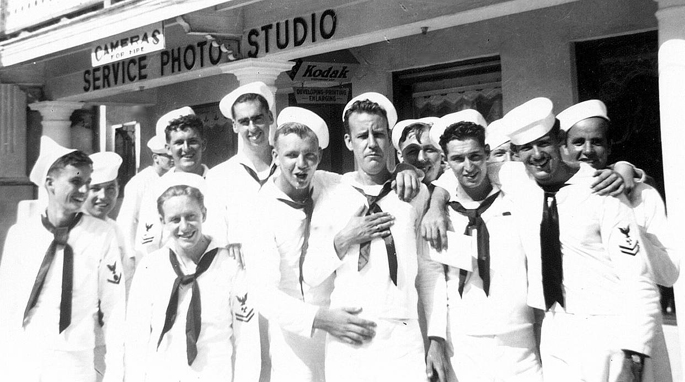
| Does Anyone Know These Handsome Lads….? | |||||||||||||||
 |
|||||||||||||||
The
penciled notation on the back of this snapshot indicates they are USS
Pope men ashore in Bermuda - probably some time in 1944 but that is
the only information |
|||||||||||||||
|
If you can identify them, click on the icon to let us hear from you. | ||||||||||||||
 |
|||||||||||||||
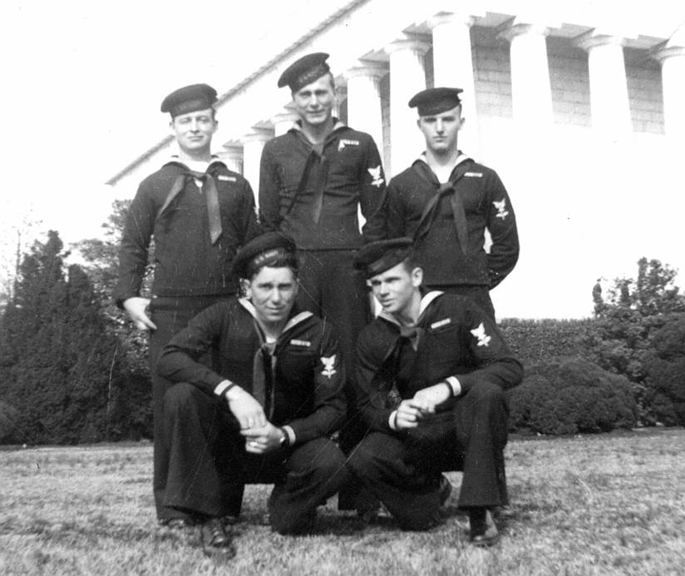
| Len
Thorne Paul Setzer, Don Baker, Hal Morrison, Ed Schroeder of the USS
Guadalcanal 1944 |
|||||||||||||||
 |
|||||||||||||||
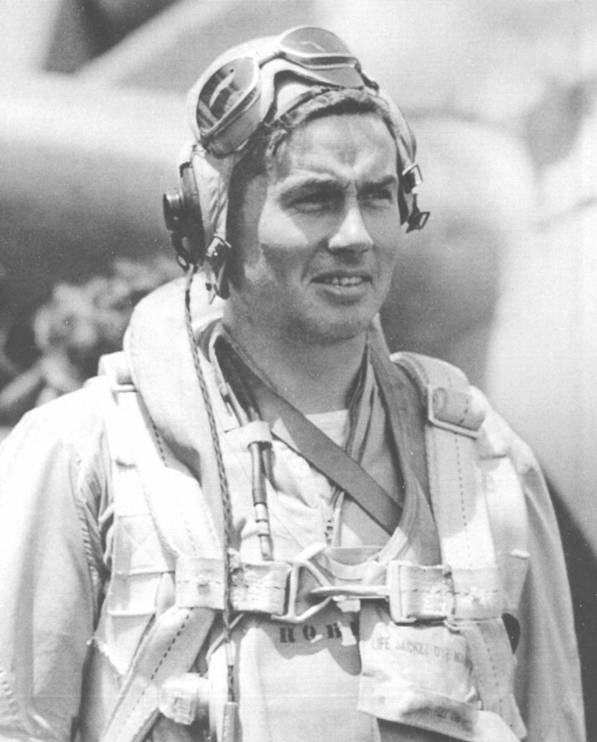
Lt.
Wolffe Roberts, VC-8 Squadron, pilot of "Frisky 7" June 4,
1944 |
|||||||||||||||
Articles
from the September 2003 issue of the SCUTTLEBUTT |
|||||||||||||||
| Carrier Qualifications | |||||||||||||||
Bob Holmbeck describes his experience as a young Ensign making his first carrier landings in an SB2C dive bomber in 1945. Here's Bob…. |
|||||||||||||||
After
10 to 15 hours of field carrier landing practice, we became comfortable
with flying low at slow speed. Then we went out to a carrier standing
by at sea to become full fledged carrier pilots. Our ship was USS Guadalcanal
CVE-60, out of Mayport, Florida. It was a small escort carrier that
couldn't take many aircraft at one time, so we flew out with six '2C's,
each with another pilot in the back seat to conserve deck space. |
|||||||||||||||
After three or four landings with things going very naturally, I came
up the groove and everything was normal. The carrier was at a small
angle to the wind, not straight down the center. That day, it was 10
15 degrees right so prop wash was going off to the left. Receiving the
cut signal from the LSO, I pulled back on the throttle, heading for
the deck. While coming back on the stick, I noticed that the aircraft
was drifting left. I was not down the centerline of the deck. …contributed by Bob Holmbeck TG 22.3 Association Member |
|||||||||||||||
| USS Abnaki - the Tug that Could… | |||||||||||||||
| Four
days after the capture of the U-505 the fleet tug USS Abnaki AFT- 96 rendezvoused
with TG 22.3 and took over the U-505 tow from USS Guadalcanal for the
final 2,500 miles to Bermuda. Abnaki then spent the remainder of the war
in Europe towing material supporting the cross-channel invasion, making
stops in Iceland, South America and New Foundland. With the war over, Abnaki transferred to the Pacific Ocean doing towing and logistics in Japan and China. Abnaki joined Service Div. 31 during the Korean conflict. In 1955 Abnaki helped evacuate Chinese troops and civilians from China to Taiwan. In March 1965 Abnaki made her first of 12 trips to Vietnam and was reportedly the first U.S. Navy ship to make port in Cambodia. Abnaki participated in Operation "Frequent Wind," the evacuation of Saigon. She then towed unwanted ships to sea and sank them. Abnaki was reputedly the last U.S. fighting ship to leave Vietnam. |
|||||||||||||||
In
September 1978 Abnaki was sold to and has been in service with the Mexican
Navy for the past 25 years. … contributed by Joe
Colombara USS Abnaki |
|||||||||||||||
| How to Enlist at Age 14…. | |||||||||||||||
| One
morning during the Minneapolis reunion Conway and I were sitting on a
bench in the sun in front of the hotel whiling away the time spinning
yarns when Conway came up with the following story. It was so funny and
outlandish I knew I had to put it in Scuttlebutt. Here it is….Don In 1943 WW II was in full swing and I figured it was time to enlist. Only one problem - I was only 14 years old and the Navy required enlistees be at least eighteen. Well - this didn't seem to be too much of a problem so I went down to the local recruiting station and presented myself for duty. The Recruiter kind of squinted his eyes, looked me up and down and asked - "How old are you? I looked him right in the eye and told him "I'm eighteen". He considered that for a minute and then said "I'm going to have to see your birth certificate". Well that settled that - knowing the birth certificate wasn't going to show I was eighteen there was no point in hanging around in that office so I told him I would be back. Actually, I went a few miles down the road and presented myself at the next recruiting office. Same thing happened - when I told them I was eighteen the second recruiter gave me the look and wanted to see my birth certificate. But I was ready for them this time - I told him I had been born in Paris and when the Germans invaded, the hospital records had been destroyed so I had no birth certificate. This guy had a sense of humor - he laughed and finally relented - at least he gave me a piece of paper and told me to go find three people who knew me and have them sign it saying I was eighteen. |
|||||||||||||||
| Now we were getting some place. I took the paper to the pool hall and three guys hanging out signed it for me. Back at the recruiting center the man took the paper from me, grinned and said, "OK - your in" and that was the beginning of thirty years in the US Navy. …as related by Conway
"Heavyweather" Clay USS Jenks |
|||||||||||||||